SFT 2026-27 Additional Resource HUB for Biomedical, Software and Hardware Engineering plus Robotics
Resource Hub for Students and Educators
Welcome to our Resource Hub, a dedicated section designed to support students and educators in their projects. This space serves as a collection of valuable tools, guides, and examples to inspire and assist in both software and hardware development. Whether you're exploring modern methodologies, delving into cutting-edge technologies, or seeking inspiration from prior successes, this hub is here to help.
Stay tuned for more updates—and happy innovating!
1- Methodologies
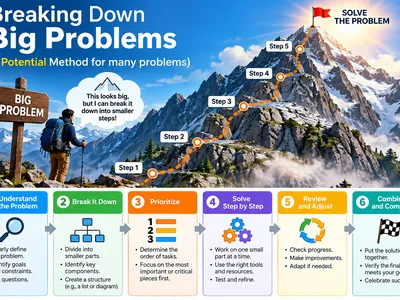
2- Design and Decision Tools
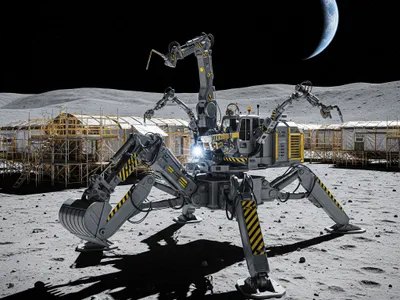
3- Robots
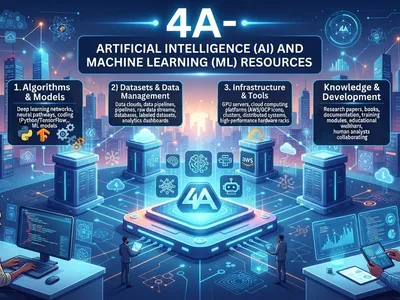
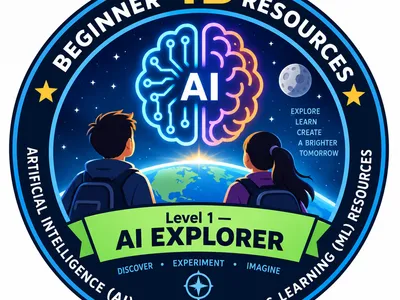
4- AI and ML
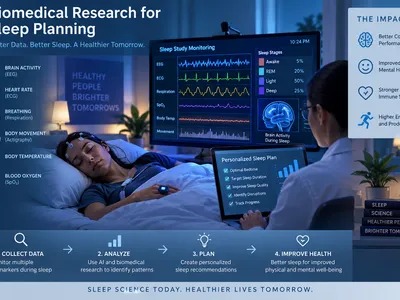
5- BIO Medical Additions
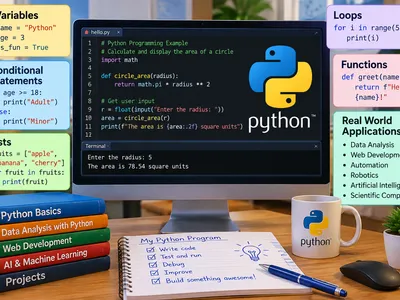
6- New Skills ( Python Tutorial ) and an Intro to Vibe Coding ( Future )
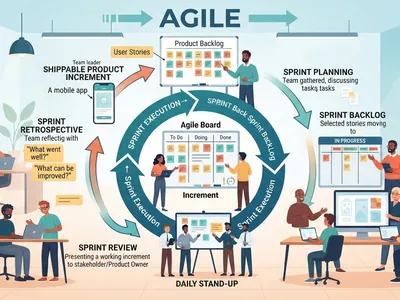
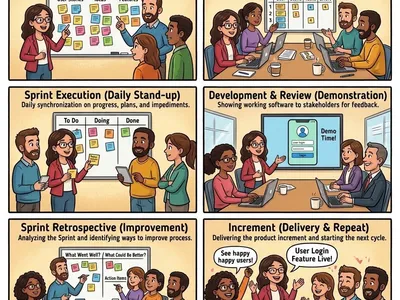
1A - Agile Development Methodology Overview
An Intro to Agile for High School and College Students
Gain a brief but comprehensive understanding of the Agile methodology, widely used for both software and hardware development. Learn how its principles of flexibility, iterative progress, and collaboration can be applied to your projects for maximum efficiency and success. This overview aims to provide a solid foundation for beginners and a quick refresher for those familiar with the process.
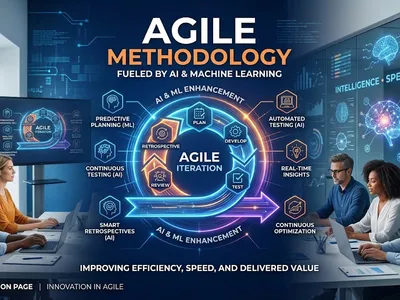
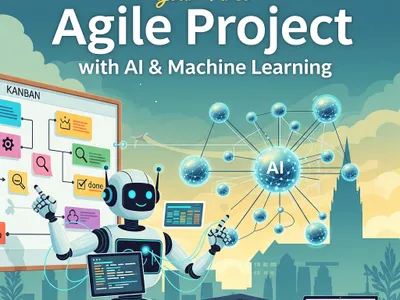
Agile methodology in the age of AI/ML is ready. It examines why time-boxed Scrum breaks down on ML work (front-loaded data uncertainty and back-loaded model drift), documents named case studies. Add the new functions of AI & ML to the standard software cycle ( Version 0 )
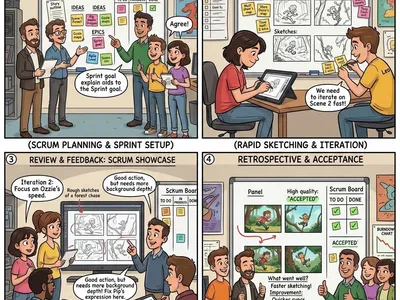
2b - Explainer Video for Story Boards - Used Claude AI to Convert Script
Student Story Board Prompt: Act as an engineering storyboard instructor helping junior college students. Create an 8-panel educational storyboard for [INSERT ENGINEERING PROJECT]. Identify the user, their goal, the operating environment, and the main engineering constraints. For each panel provide: (1) scene title, (2) what to draw, (3) the user's action, (4) the engineering question, and (5) a short voice-over narration. Include at least one failure scenario and a safe response. Then derive five candidate engineering requirements, three Agile user stories in the form 'As a [user], I want [capability], so that [benefit]', measurable acceptance criteria, and a simple Agile user story map. Use a clean cartoon or hand-drawn engineering style, 16:9 composition, consistent characters and equipment, and accurate technical labels. Distinguish verified requirements from illustrative assumptions. Do not invent NASA approvals or claim that an untested safety-critical device is safe.
While NASA delivered the hardware to Intuitive Machines on July 13, 2026, it is still undergoing spacecraft integration. [1] (https://mlq.ai/news/nasa-navigation-payload-reaches-intuitive-machines-first-lunar-relay-satellite/)
Mission & Launch Details
• Payload Identity. The NavCube3-mini is a 3.5-pound receiver built at NASA's Goddard Space Flight Center to test using weak Earth-based GPS and Galileo signals for autonomous navigation near the Moon. [1] (https://www.nasa.gov/technology/space-comms/nasa-delivers-navigation-system-for-commercial-lunar-relay/), [2] (https://mlq.ai/news/nasa-navigation-payload-reaches-intuitive-machines-first-lunar-relay-satellite/), [3] (https://www.instagram.com/p/DcBezocxWWQ/)
• Host Satellite. It is integrated into Altus-1, Intuitive Machines' first lunar communications relay satellite developed under NASA's Near Space Network Services contract. [1] (https://www.nasa.gov/technology/space-comms/nasa-delivers-navigation-system-for-commercial-lunar-relay/), [2] (https://mlq.ai/news/nasa-navigation-payload-reaches-intuitive-machines-first-lunar-relay-satellite/)
• Launch Vehicle & Mission. Altus-1 is scheduled to launch as a rideshare payload alongside Intuitive Machines' Nova-C IM-3 ("Trinity") lunar lander aboard a SpaceX Falcon 9 rocket. [1] (https://nextspaceflight.com/launches/details/6826/)
• Target Launch Date. Although originally targeted for late 2026, the IM-3 mission and Altus-1 have been pushed to early 2027 (No Earlier Than Q1 2027). [1] (https://en.wikipedia.org/wiki/IM-3), [2] (https://mlq.ai/news/nasa-navigation-payload-reaches-intuitive-machines-first-lunar-relay-satellite/), [3] (https://www.nasa.gov/event/clps-flight-intuitive-machines-im-3/), [4] (https://nextspaceflight.com/launches/details/6826/)
If you'd like, I can provide more details on the NavCube3-mini navigation technology or the broader Intuitive Machines IM-3 lunar mission. Which would you like to explore?